Tuesday, August 26, 2014

Season Extension In Maine is Growing!

Farm Manager Sarah Marshall pauses during high tunnel 
construction (Spring '14).
Season extension - using high tunnels, hoop houses, or other mechanisms for growing more types of crops by enabling farmers to start sooner in the spring and to grow longer into the winter and/or year round - has meant better quality and a better variety of Maine-grown produce. This means consumers like you and me have a beautiful and bountiful array of local produce options to choose from these days, whether it be at the farmers' market, farm stand, or even in the grocery store.

The University of Maine has supported and continues to advocate for an expansion of season extension farms, and the USDA's NRCS (Natural Resource Conservation Service) has enabled numerous growers in Maine and around the country to do the same through grant-funded, season extension infrastructure. From a macro perspective, the increase of season extension growing means improved state self-sufficiency - basically Maine is able to grow more of the food its residents eat.

Hussein, Holly, and Sarah Bostick install the high 
tunnel's front plastic (Spring '14)
Four Fresh Start farmers received a NRCS grant to build a high tunnel this year in order to expand the farm's ability to grow crops like peppers, basil, eggplants, and tomatoes for wholesale markets that include restaurants, specialty food buyers, summer camps, schools, and large food distributors.

The high tunnel has and will continue to enable these producers to sell to more markets, where food doesn't just need to taste farm fresh, but also needs to look beautiful enough to impress chefs, food service directors, and consumers specialty markets like Rosemont and Forage.
Hungarian hot wax (above) and
purple bell pepper (below)

Long-growing crops need hot weather and are often prone to blight and pest damage, (especially when farmers grow chemical free, as we do at Fresh Start Farms). But season extension is helping with this as well.
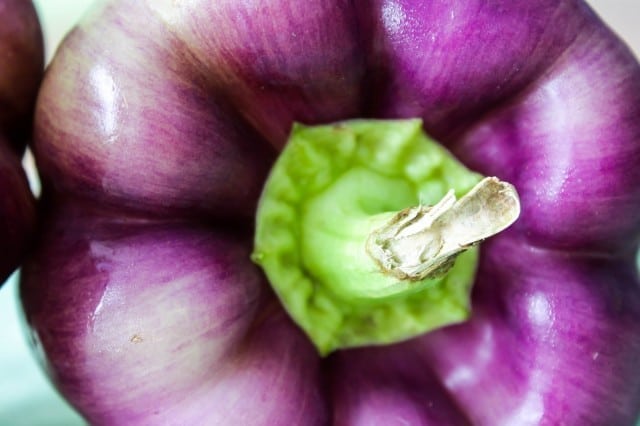
The high tunnel enables Fresh Start Farms to start growing tomatoes earlier in the season, as well as protect them from some of the issues that often plague those coming straight out of farmers' fields. This high tunnel is also what has allowed Habiba Noor to crank out some of the shiniest purple and green bell peppers, and spicy Hungarian hot wax peppers I have ever seen!

Just some food for thought - something to consider and appreciate when buying, ordering, or eating local food!

Speaking of eating local food, please join us for our final Twilight Dinner event of the summer THIS THURSDAY. Here are the full details:
Our final Twilight Dinner:
August 28th at 6:30pm - Twilight Dinner at Turkey Hill Farm in Cape Elizabeth, chef Christina Seeley with Emmet Helrich of Local 188 in Portland. Pairings by Bunker Brewing Company. BYOB optional. Sponsor: Maine Brew Bus - Click HERE for tickets!
Complete Twilight Dinner info. can be found at our website:http://cultivatingcommunity.org/calendar/twilight-dinners.html


Monday, August 18, 2014

What goes into growing your garlic?

The cycle of growing garlic is one that teaches the art of patience and trust. Many don't know what goes into growing this culinary staple that in some form, appears at farmers' markets and in CSA bags throughout the summer and fall. Here is the life cycle of garlic at Fresh Start Farms
One clove of garlic will turn into one head of garlic....but the process is drawn out over an entire year.

Soon-to-be-cut garlic scape
Each fall near the end of October, the farmers sit down with bushel baskets full of their biggest and best heads of garlic and break them down into individual cloves. The soil is prepared with the tractor and some good organic fertilizer or compost. Each clove is planted in 4-foot wide bed with three rows to a bed, 6 inches between each clove within a row. The whole bed is covered in a few inches of mulch hay, which acts as a protective blanket against the cold and as a shield against emerging weeds in the spring.
Garlic bulbs pulled from the field to dry

The little cloves of garlic hunker down for the winter, saving the strength that they need to burst forth from the surface in early spring. The first garlic often emerges in March and speeds upwards, upwards towards the sun incredibly quickly until it begins to produce flowers, or scapes, which you received in your CSA bag in July. 

By harvesting the scapes, the garlic plant redirects its energy from seed production into clove production, resulting in larger heads and cloves of garlic.

Garlic ready for market
More or less a month after garlic scapes are harvested, it is time to harvest the garlic. All the plants come out of the ground on the "perfect day" and are laid out to dry in a greenhouse or barn or other warm dry place for approximately 3 to 4 weeks. When the plants' stalks, roots, and wrappers are entirely dry, the garlic heads can be cut from their stalks and cleaned. At this point, the garlic is ready to spend the winter in your kitchen! Depending on the variety, garlic that is stored in a cool dry (not your refrigerator) place, should remain good for 5-9 months.

Member-to-member culinary share:

Need some inspiration in the kitchen? check out this member's CSA meal.
Fresh dill jasmine rice with chard and chickpeas.
"A great use for all that chard and dill I've received over the past few weeks!"


Upcoming events to note:
Our final Twilight Dinner:
August 28th at 6:30pm - Twilight Dinner at Turkey Hill Farm in Cape Elizabeth, chef Christina Seeley with Emmet Helrich of Local 188 in Portland. Pairings by Bunker Brewing Company. BYOB optional. Sponsor: Maine Brew Bus - Click HERE for tickets!
Complete Twilight Dinner info. can be found at our website: http://cultivatingcommunity.org/calendar/twilight-dinners.html

Monthly farm visits for CSA members and volunteers:
Friday, August 22 from 9:00a – 11:00a in Lisbon
Friday, September 26 from 12:00p – 2:00p in Lisbon (Please note updated time)
Friday, October 3 from 12:00p – 2:00p in Lisbon

RSVP with Ashley if you would like to attend: fsf@cultivatingcommunity.org & (207) 761-GROW

Friday, August 1, 2014

Try this recipe generator to invigorate your CSA cooking!

Cooking tips for the week:

A coworker passed along this interesting link from the New York Times Magazine: http://www.nytimes.com/interactive/2013/08/02/magazine/bittman-farmers-market-recipe-generator.html?_r=0#/?id=strawberry-orange-soup_0-0-0.


This recipe tool is neat if you're looking for new and creative ways to eat the zucchini/summer squash, cucumbers, and cauliflower that have started to appear in your CSA bags already!

Check it out and let us know if you come up with something good!

Cultivating Community events:

TD table small
Twilight Dinners:
August 7th at 6:30pm - Twilight Dinner at Turkey Hill Farm in Cape Elizabeth, chef Leslie Oster of Aurora Provisions in Portland. Parings by Allagash Brewing Company. BYOB optional. Sponsor: Allagash Brewing Company - Click HERE for tickets!

August 28th at 6:30pm - Twilight Dinner at Turkey Hill Farm in Cape Elizabeth, chef Christina Seeley with Emmet Helrich of Local 188 in Portland. Pairings by Bunker Brewing Company. BYOB optional. Sponsor: Maine Brew Bus - Click HERE for tickets!
Complete Twilight Dinner info. can be found at our website: http://cultivatingcommunity.org/calendar/twilight-dinners.html

Monthly farm visits for CSA members and volunteers:

Friday, August 22 from 9:00a – 11:00a in Lisbon
Friday, September 26 from 9:00a – 11:00a in Lisbon
Friday, October 3 from 12:00p – 2:00p in Lisbon 

RSVP with Ashley if you would like to attend: fsf@cultivatingcommunity.org & (207) 761-GROW


Thursday, July 24, 2014

What to do with fennel (including the tops) and all those carrots

Although somewhat strange looking, I fennel is versatile and can be used to spice up your plate when used raw or cooked! Fennel lasts in the fridge a while too.

I often shred fennel over salads or add with carrots, celery, kohlrabi, etc. to a crunchy chopped salad with balsamic, oregano and olive oil vinaigrette.

My personal favorite fennel use is combining it with carrots in cooked dishes. This very basic recipe is quick and easy. I sometimes omit the cream for a lighter version. http://allrecipes.com/recipe/carrot-and-fennel/.

Another easy recipe I came across is this fennel-carrot-sage roasted root recipe that looks great, though I haven't tried it. http://www.greenkitchenstories.com/carrots-fennel-sage-%E2%80%93-roasted-veggies/

I used to throw away the fennel stocks because I didn't kno wwhat to do with these feathery greens and then discovered this licoricey herb has many uses. Check out http://www.thekitchn.com/top-5-ways-to-use-fennel-stalks-and-fronds-ingredient-spotlight-183057 for some ideas.

Have amazing kitchen successes to share? email fsf@cultivatingcommunity.org or share with this blog!

Thursday, July 17, 2014

Weeks 1 & 2 cooking tips, recipes, and upcoming events

Please read on for some tips for using those not-so-common items, recipe ideas from fellow CSA members, as well as a list of upcoming events:

The farmers are harvesting all kinds of wonderful and delicious veggies. Here are some recipe links and tips for using and preserving some of the items you may be less familiar with and/or have received a lot of. 

Garlic Scapes

I often use my garlic scapes to make a type of pesto (or "scesto" as my farmer friend calls it). I make it without nuts and just toss the scapes into a food processor with some olive oil, salt, pepper and lemon juice.  Adding grated parmigiana or romano cheese is also yummy. The following webpage has a ton of uses including a recipe for scesto that sounds good, though I haven't tried it. http://www.seriouseats.com/recipes/2010/06/the-crisper-whisperer-what-to-do-with-garlic-scapes-recipe.html

Dill and Herbs

Often you will find that your farmer puts WAY more herbs in your CSA bag than you can eat in a week. Seynab's dill looks great and her bunches have been huge. One easy way to preserve herbs you can't eat fresh is to dry them. 

Here is some information about drying dill, although this also applies to most other herbs as well. 

One way to dry dill is to hang a small clothesline in the corner of a room or tall doorway. Use clothespins to to hang the plant by the stem [don't leave it on the root, it will take a lot longer to dry if you do ] upside down in a shaded, breezy area for about three days, until the stems and dill sprigs feels crispy and easy to crumble. This is easier when the humidity isn't very high.
You can also dry dill in the oven at about 110 F for 6-8 hours. If you have a gas oven, you can leave them inside the oven on trays all day with only the heat from the pilot light.

Dried herbs won't last very long on the shelf unless you have some way of keeping them airtight. If they are not completely dry when you store them they will mold.

You can also try adding a small amount of washed and chopped dill (or any type of herb) to ice cube trays with a little water and freeing them. Once frozen, add cubes to soups, stir fries, etc. for flavoring.
(Info. from helpfulgardener.com)


Kohlrabi
I found this webpage to be a good starting point for figuring out the many ways to use kohlrabi: http://gracelinks.org/485/real-food-right-now-and-how-to-cook-it-kohlrabi. The author of this page is using purple kohlrabi but the green variety you received in your bags (that grows exceptionally well here in Maine) can be prepared the same way.

I didn't think to use the leaves of kohlrabi until my husband cooked them up like collard greens last week. They do need to be cooked a while to become tender but are great for soaking up flavors! I cooked them with chopped garlic scapes, shallots and veggie broth with some sesame oil, a tad of brown rice vinegar, soy sauce and fresh, minced ginger. I also often cook greens in chicken broth and add (humanly raised, organic, antibiotic-free) chicken or pork sausage when I have a few extra dollars to spend. Spice this with Cajun spices and add a can of crushed tomatoes and wild rice mix for a sort of jambalaya-type dish. 

Member-to-member culinary share:
Thank you Lily DuVal who sent us the following CSA-inspired dishes. Feel free to send your CSA culinary successes to share with other members. Send to fsf@cultivatingcommunity.org


My first Cultivating Community meal!

Mussels steamed with garlic scapes with a sirloin, young onion, greens and radish salad.

thank you, Khadija for adding some wonderful additions to my husband and my 18th anniversary meal!
Meal 2: Miso soup made with radish leaves and root, (surprisingly good in soup) with garlic scapes, young onion and beet greens. Sided with crab rangoon with garlic skapes and scallions and calamari.

Upcoming events to note:

Cultivating Community's Twilight Dinners

July 17th at 6:30pm - Urban Grazing Event at Urban Farm Fermentory at 200 Anderson Street in Portland; chef Brad Messier of Rosemont Market. Pairings provided by Urban Farm Fermentory. No BYOB. Other libations available from Urban Farm Fermentory. Sponsor: Rosemont Market & Bakery - Click HERE for tickets!

Also check out more upcoming Twilight Dinners that occur throughout the summer:
http://cultivatingcommunity.org/calendar/twilight-dinners.html

Farm Tour Volunteer Days for Fresh Start Farms CSA Members

This is a chance to come tour the locations where Fresh Start's farmers work and even get your hands a little dirty helping out!

Join us at our farm sites this season:

Friday, July 25 from 9:00a – 11:00a in Lisbon
Friday, August 22 from 9:00a – 11:00a in Lisbon
Friday, September 26 from 9:00a – 11:00a in Lisbon
Friday, October 3 from 12:00p – 2:00p in Lisbon
RSVP with Ashley if you would like to attend: fsf@cultivatingcommunity.org & (207) 761-GROW

Thank you to volunteers who helped out with Christine and Alfred's fields in South Portland last month!

Thursday, June 12, 2014

Farm tour Fridays at Fresh Start Farms

This is an opportunity to come tour the locations where Fresh Start Farms' farmers work, get to know your farmer, and even get your hands a little dirty helping out! 

Join us at our farm sites this season:

Friday, June 20 from 12:00p – 2:00p in South Portland

Friday, July 25 from 9:00a – 11:00a in Lisbon

Friday, August 22 from 9:00a – 11:00a in Lisbon

Friday, September 26 from 9:00a – 11:00a in Lisbon

Friday, October 3 from 12:00p – 2:00p in Lisbon

RSVP with Ashley if you would like to attend:  fsf@cultivatingcommunity.org & (207) 761-GROW


Monday, June 9, 2014

Our CSA Featured in the Portland Press Herald!

Check out this article by Laura McCandlish that features Fresh Start Farms as well as other great CSAs: http://www.pressherald.com/2014/05/31/the-farm-to-table-family-when-csas-give-you-greens-make-smoothies/


"If you’re among the 20 percent of Mainers who rely on food stamps, many CSAs now accept monthly deductions off a member’s SNAP card in lieu of advance cash. Fresh Start Farms near Lewiston, where nonprofit Cultivating Community helps new immigrants (primarily Somali Bantus) farm, has accepted SNAP since 2010, for half the $550 cost of its full-season family share. A matching incentive from the Wholesome Wave Foundation covers the rest. If you work at Geiger or Bates College in Lewiston, you can conveniently have the CSA money deducted from your paycheck and the produce delivered to your office (Fresh Start Farms hopes to expand this service to other workplaces.)"