|
| Jabril in the wash station. (Photo by Greta Rybus) |
Each week we profile one of the CSA farmers who grows your food. You can also get to know your farmer by visiting him or her at a farm stand or farmer's market, or by visiting our farm sites during a monthly Friday Farm Tour.
This week your featured farmer is Jabril Abdi. Jabril provides CSA shares for staff at Carbonite and the Dingley Press, as well as at the Pineland YMCA in New Gloucester. He also provides CSA shares at the Kennedy Park Farm Stand (learn more about our farm stands here) in Lewiston.
In addition to providing CSA shares, Jabril sells his produce to St. Mary's Food Pantry in Lewiston. He also pools his produce with other Fresh Start Farms growers to provide wholesale quantities of vegetables for schools, summer camps, specialty markets, restaurants, and larger distributors.
From Jabril - I am originally from Somalia and now live here in Maine. I've been farming with Fresh Start Farms since 2006.
I have been farming my whole life and I will always be a farmer. If anybody says that small farms and farmers like us are not important they are wrong, and they will know that when their stomachs are empty.
 |
| Jabril in his cornfield. (Photo by Greta Rybus) |
When I moved to Lewiston and learned about Fresh Start Farms, it only seemed natural to start planting seeds myself. The soil here is more consistent than it is in Somalia where it is varied in places from red to white to brown. And, though I’m used to selling my products, here is different. Here you put everything out on the table and you have to advertise for yourself instead of just letting your product speak for you. Fortunately my children help with my marketing.
I don’t have one favorite part of this work—it’s all important. My favorite things to grow are lettuce, spinach, broccoli, potatoes, tomatoes, though most of these are new crops to me here. These are what customers expect and if I don’t have them, customers don’t come to my stand.
I am happy to be at the market selling, it means that my investment is working when people are lining up to support me. If my customers come to my farm, I know they will be happy with what they see—my growing practices that keep the soil rich and my plants strong.
I would love it if my customers would tell their friends about me, and about Fresh Start Farms. Let people support us, because we are evidence that even if you have nothing, you can still put seeds into the ground.
***
Recycling your green CSA bags
Many members have asked me how they can recycle their plastic CSA bags for next year and with wholesale slowing down a bit, I've finally taken a minute to think this through. Here are a few ways to recycle your bags depending on where you pick up your share:
*Please make sure your bags are clean and dry before returning them. Thank you!
If you attend a farm stand or farmers' market - feel free to bring your bags back to your farmer (this is an easy one :).
If you pick up at an office delivery site - you or your site coordinator can collect bags from all members wishing to return them at your site. Once bags have been collected, give me a call and we'll come get them.
If you pick up at the Portland YMCA - Please drop your bags off at the Cultivating Community office in Kennedy Park. We are at 52 Mayo St., Portland on the left when you are coming down the hill. You will see our green sign.
If you pick up at the Pineland YMCA - Please bring your bags to Maggie/the front desk next week when you come to pick up your CSA share (sorry, you will have to keep bags from the final week :).
If you pick up at Munjoy Hill - I live right next door at 79 Congress St. If facing Elizabeth's house, my apartment is on the right down the little driveway set back (white duplex with black shutters). You can place bags on the little porch/entry way.
If you pick up at Longfellow Books - I come and pick up unclaimed shares at the end of the day. Please leave your bags neatly folded in the CSA area and I will grab them.
You can always drop off bags at Cultivating Community's office if that is most convenient. We are located on the left as you come down the hill at 52 Mayo St. in Portland's Kennedy Park neighborhood. At least one person will be at the office consistently between 9:00 and 4:00 Monday through Thursday.
Thank you!
***
Member-to-Member Culinary Share
One of our Monument Square CSA members emailed me the following:
Just wanted to let you know I am making a vegetable curry with dal [lentils] using the squash, potatoes, onions, and cilantro, cooking right now in the slow cooker!
This recipe idea is short and sweet and made my mouth water. It also inspired me to get out my crock pot/slow cooker to make some hardy soups and stews.
A quick Google search yields almost an overwhelming number of slow cooker recipes. Here is one that looks yummy and could be easily modified to fit your CSA veggies. Don't forget the celeriac! I often substitute this for celery and in my humble opinion, it adds great flavor to pretty much any soup or stew. Did I mention I'm a huge celeriac fan?
This recipe is one of many from Ohmyveggies.com at
http://ohmyveggies.com/recipe-chard-lentil-potato-slow-cooker-soup/ in case you want to check out more slow cooker ideas.
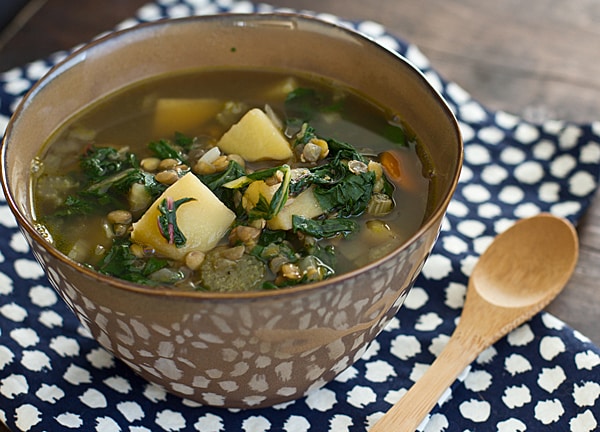
Chard, Lentil & Potato Slow Cooker Soup
Ingredients
- 1 tbsp. olive oil
- 1 large yellow onion, chopped
- 1 celery stalk, sliced
- 1 large carrot, sliced
- 2 garlic cloves, minced
- 1 large bunch Swiss chard, leaves torn into bite-sized pieces and stems sliced
- 1 c. dried brown lentils, picked over and rinsed
- 4 medium Yukon Gold potatoes, cut into 1-inch pieces
- 6 c. vegetable broth
- 1 tbsp. soy sauce or tamari
- salt and pepper to taste
Instructions
- Heat oil in a large skillet over medium heat. Add onion, celery, carrot, garlic, and stems from Swiss chard. Cover and cook until softened, about 8-10 minutes, stirring occasionally.
- Add cooked vegetable mixture, lentils, potatoes, broth, and soy sauce in a 4- to 6-quart slow cooker. Stir to combine, cover, and cook on low heat for 8 hours.
- Just before soup is finished cooking, bring a large pot of water to a boil. Place reserved chard leaves in boiling water and cook until tender, about 5 minutes. Drain well and stir into soup. Season with salt and pepper to taste.
Read more at http://ohmyveggies.com/recipe-chard-lentil-potato-slow-cooker-soup/#i59h7ryO5uSpwEbl.99